Installer selection
The right installer can explain the load plan, site constraints, equipment choice, approval path, commissioning tests, and long-term service in writing. Credentials matter, but the quality of the project design and contract matters too.
Practical answer
Interview at least three qualified firms against the same project brief. Verify business identity, trade licenses, insurance, bonding where applicable, manufacturer authorization, responsible electrician and fuel contractor, permit history, comparable projects, subcontractors, service coverage, and references. Compare written designs and contracts, not sales presentations or the lowest total.
Check business, contractor, electrical, fuel, engineering, and manufacturer qualifications that apply locally.
A solar installer, generator dealer, electrician, and battery integrator can have different strengths.
Load schedule, one-line diagram, equipment schedule, location, fuel, permits, and commissioning should align.
Exact models, scope, exclusions, schedule, payments, corrections, warranties, and closeout belong in writing.
Ask who diagnoses, pays labor, holds monitoring access, stocks parts, and responds after a storm.
The best reference questions cover delays, corrections, warranty calls, communication, and final documents.
Start with the project boundary
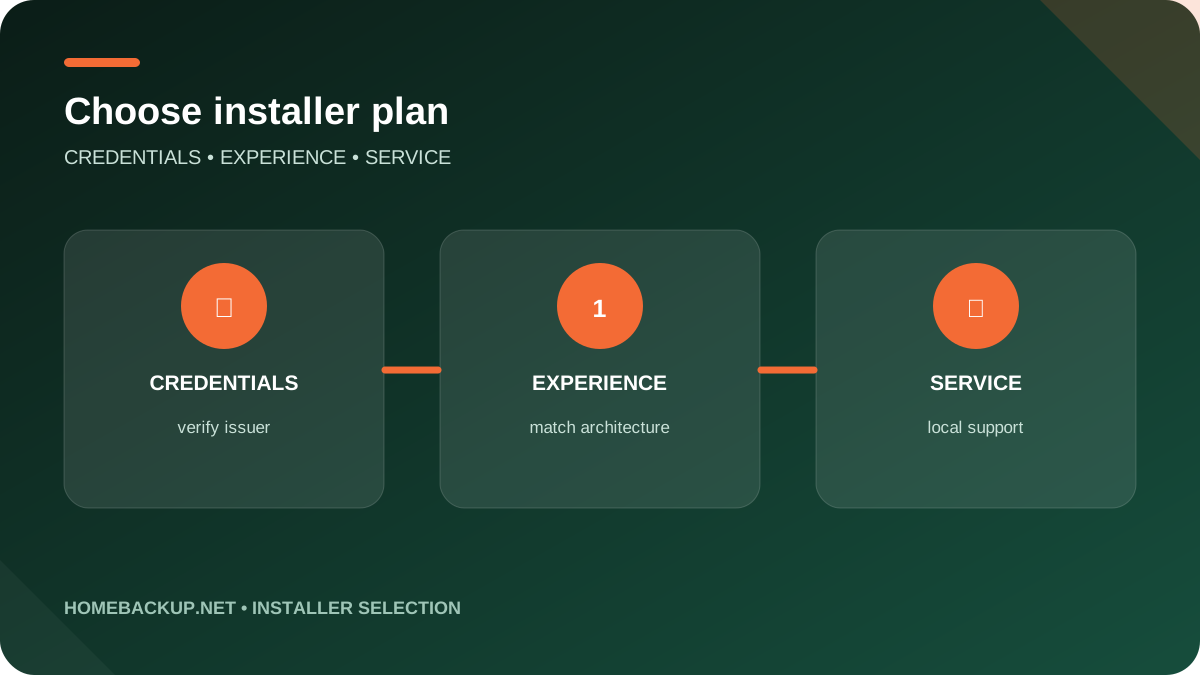
Prepare one project brief before contacting contractors. Include property type and ZIP code, outage problem, critical circuits, 120/240V loads, runtime, battery, generator, or hybrid preference, existing solar, electrical service, fuel, desired automatic operation, possible locations, target schedule, and photos. This keeps bidders focused on the same outcome.
Match installer experience to the architecture. A portable-generator inlet may primarily require an electrical contractor familiar with the exact panel. A standby generator needs electrical, fuel, placement, transfer, and service capability. A solar-plus-storage retrofit needs battery, inverter, utility interconnection, and outage-mode solar experience. A hybrid needs source coordination and controls.
Use credentials as minimum evidence, not a quality guarantee. DOE advises choosing licensed, bonded, and insured installers and checking subcontractors. NABCEP offers an Energy Storage Installation Professional certification with training and project-experience requirements. Local contractor and trade licenses remain the legal qualification questions to verify.
An installation should begin with a written operating scenario. Identify the circuits that must work, the largest loads that may overlap, the required outage duration, the desired transfer behavior, and how the system will recover after stored energy or fuel is used. This prevents the project from being reduced to a product name or a headline power rating.
Keep four checks separate. Electrical capability asks whether voltage, continuous output, surge, conductors, breakers, and transfer equipment match the load. Energy or fuel asks how long the plan can operate. Installation compliance asks whether the equipment, location, plans, permit, utility process, and inspections are acceptable. Ownership asks who will operate, maintain, update, and service the system after commissioning.
What the project actually includes
Ask who performs the site survey, load study, one-line, product selection, structural or fire documentation, permit plans, utility application, electrical work, fuel work, commissioning, monitoring, training, and warranty service. Get names of subcontractor companies and the responsible licensed individuals where required.
Request a written proposal with exact models and quantities, protected-load schedule, continuous and surge output, usable energy, voltage, transfer, solar behavior, fuel rating, location, conductor and pipe routes, panel and service work, load controls, permits, utility tasks, commissioning, documents, schedule, payments, warranties, exclusions, and alternates.
Ask for a sample closeout package and commissioning checklist before signing. A company that cannot show how it documents permits, inspection, settings, as-builts, serial numbers, shutdown, training, and service may treat project completion as “the app connected.”
Installer evaluation decisions
| Project decision | What changes | Risk if omitted | Evidence to request |
|---|---|---|---|
| Business and trade identity | Determines legal contract and qualified work | A sales brand may subcontract everything to unknown firms | Legal name, address, licenses, and responsible parties |
| Insurance and bonding | Changes protection and contract requirements | Claims can fall on the homeowner | Current certificates and issuing contacts |
| Relevant project experience | Changes design quality for the chosen architecture | General solar or electrical experience may miss storage or generator details | Comparable projects and permit records |
| Manufacturer authorization | Changes access to training, commissioning, and warranty channels | Unauthorized installation can complicate support | Current authorization for exact product |
| Site survey depth | Changes discovery of panel, fuel, placement, and routing issues | Change orders appear after equipment arrives | Written survey checklist and photos |
| Design deliverables | Changes ability to compare and approve the system | Marketing claims replace electrical and operating detail | One-line, load schedule, equipment schedule, site plan |
| Permit responsibility | Changes schedule, corrections, and closeout | Open or rejected permits become the homeowner problem | Named submitter, included fees, and correction terms |
| Commissioning | Changes whether the real outage plan is proven | The system turns on but important loads or restoration fail | Written test script and results |
| Warranty service | Changes labor, travel, parts, monitoring, and response | Long equipment warranty provides weak local support | Service rates, territory, response, and escalation |
| Contract and payments | Changes leverage and risk | Large deposits and vague milestones expose the buyer | Detailed contract and completion-based schedule |
The decisions in this table interact. Moving a battery may change conductor length, fire review, wall construction, communications quality, and labor. Adding central air may change inverter power, battery count, load management, panel work, and commissioning. A lower equipment quote can become the higher installed price when it omits required electrical or site work.
Three installer-selection scenarios
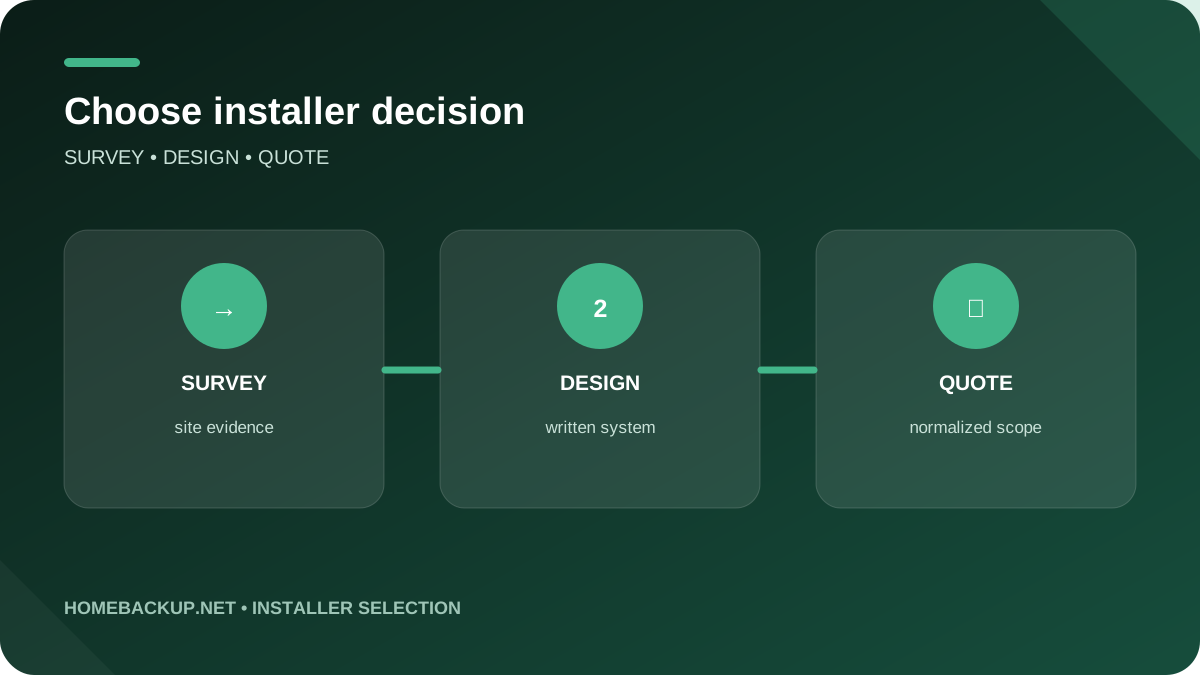
Ask for examples using the same solar inverter family, outage-mode behavior, utility, battery architecture, and permit authority. Confirm who owns the monitoring accounts and handles both solar and battery warranty issues.
A strong firm can perform or coordinate load calculation, fuel sizing, electrical transfer, placement, permits, startup, maintenance, and emergency service. Dealer status without competent local fuel and electrical work is incomplete.
The contractor should document source priority, generator start, charging power, neutral and bonding, transfer sequence, load management, solar, fuel, failure states, and commissioning. Ask for a reference with the same integration.
These examples are planning patterns, not universal designs or price promises. The authority having jurisdiction, utility, building type, electrical service, fuel supply, available working space, climate, flood exposure, equipment listing, and manufacturer instructions can change the approved solution. A project should be priced against the actual site after those constraints are known.
How cost and quotes should be structured
Get multiple written estimates with the same scope. The FTC recommends that estimates include work description, materials, completion date, and price and cautions against automatically choosing the lowest bidder. Ask for explanations when totals differ. One firm may include service upgrade, permit corrections, and commissioning that another omits.
Normalize the cash price before financing, incentives, or projected savings. Separate equipment, labor, permits, utility, site work, taxes, monitoring, maintenance, options, allowances, and exclusions. Ask for unit rates on uncertain trenching or circuit repair and written approval before change-order work begins.
Use payment milestones tied to evidence: design or permit submission, equipment delivery, rough work, inspection, commissioning, and closeout. Do not pay the full amount upfront. State rules can limit deposits and provide cancellation rights, so review the local requirements and the FTC guidance before signing.
Compare quotes by normalized scope, not only by the total at the bottom. Separate equipment, design, electrical work, fuel work, concrete or mounting, trenching, communications, permit fees, utility fees, commissioning, taxes, monitoring, maintenance, and optional upgrades. Ask which allowances can change and which items are fixed.
In July 2026, a proposal should not automatically subtract a U.S. federal residential clean-energy tax credit from the price. Current IRS instructions state that residential clean-energy credits cannot be claimed for expenditures made after December 31, 2025. State, local, utility, manufacturer, financing, or resilience programs may still exist, but eligibility and funding must be verified directly before they are included in a net-cost claim.
Permits, inspection, utility, and commissioning
A reliable installer can identify the likely authority, locally adopted rules, permits, inspections, utility process, and plan documents before the deposit. They should distinguish what is known from what depends on official review. Be cautious when a salesperson says no permit is needed for permanent panel, service, fuel, transfer, or stationary battery work without written confirmation.
Check permit history where public records allow. Look for completed projects in the same jurisdiction, not only photos. Ask whether inspections produced corrections and how they were resolved. A correction is not automatically evidence of poor work; refusing to disclose or close it is a stronger warning sign.
The contract should state who owns design errors, ordinary correction notices, concealed conditions, authority changes, reinspections, and utility delays. Final payment should require permit closeout and utility authorization where applicable, not only equipment startup.
The National Electrical Code is a benchmark for safe electrical design and installation, but it becomes enforceable through adoption. The locally adopted edition and local amendments matter. The authority having jurisdiction may include electrical, building, zoning, planning, and fire officials. A utility may have a separate review when equipment can operate in parallel with the grid, export energy, change service equipment, or participate in a program.
Keep the approved plans and final records. A complete handoff commonly includes permit closeout, inspection approval, utility authorization where required, equipment serial numbers, warranty registrations, as-built diagrams, settings, shutdown instructions, monitoring access, maintenance schedule, and test results. A system that turns on is not necessarily a closed project.
What changes in a real home?
References are most useful when questions are specific. Ask whether the final price matched the proposal, whether equipment and crews arrived as promised, whether walls or landscaping were restored, whether permits closed, whether the system ran the promised loads, how training worked, and how the company responded to a service call.
Review the support chain. The salesperson, installer, commissioning technician, monitoring provider, manufacturer, distributor, and warranty administrator may be different organizations. Ask who the homeowner calls first, who can see system data, who can authorize replacement, who pays labor, and whether another provider can take over.
Watch for high-pressure tactics: expiring price without a documented reason, guaranteed savings, “free” equipment tied to financing, a promised tax credit no longer available, blank contract spaces, requests to sign on a tablet without receiving the full document, large cash payments, or refusal to provide license and insurance details.
Existing conditions frequently control the schedule. Older panels, crowded gutters, obsolete breakers, inadequate working clearance, mixed neutrals and grounds, unpermitted alterations, weak walls, flood-prone locations, long conductor routes, missing gas capacity, and unreliable communications can all require redesign. A site survey should find these before equipment arrives.
Household priorities matter too. A sump pump during a storm, a furnace during extreme cold, refrigeration for medicine, a well pump, and medically necessary equipment need a different reserve strategy than entertainment or convenience loads. The project should document which loads may be shed, which must restart automatically, and which need a second independent contingency.
Common installer-selection mistakes
A common thread connects these errors: the buyer is shown a component while the home needs a system. The battery, generator, inlet, panel, transfer device, controls, fuel source, utility service, and selected loads must work together under normal power, outage power, restoration, maintenance, and failure conditions.
What to verify before signing and before final payment
Verify legal business name, physical address, contractor and trade licenses, insurance, bonding if claimed, manufacturer authorization, NABCEP or other credentials if claimed, responsible electrician, fuel contractor, engineer, subcontractors, permit history, complaints, references, service territory, and current warranty relationships directly with the issuer or authority.
Before signing, read every contract page and attachment. Confirm exact equipment, site plan, load schedule, performance assumptions, installation scope, exclusions, allowances, changes, permits, utility, schedule, delays, payments, financing, liens, cancellation rights, warranties, monitoring, data access, commissioning, closeout, dispute process, and who keeps removed equipment. Fill blank spaces.
Verify business and trade credentials with the issuing authority, not only with a logo on a proposal. Confirm who holds the contract, who pulls the permit, who performs electrical and fuel work, who provides engineering when required, and who will answer warranty calls. If subcontractors are used, ask for their company names and applicable credentials before work begins.
The Federal Trade Commission recommends multiple written estimates, a detailed written contract, contractor identity and license information, start and completion timing, and avoiding full payment upfront. Payment rules vary by state. Keep changes in writing and tie the final payment to the contract milestones, completed inspection, working commissioning test, and receipt of promised documents.
Safety boundaries
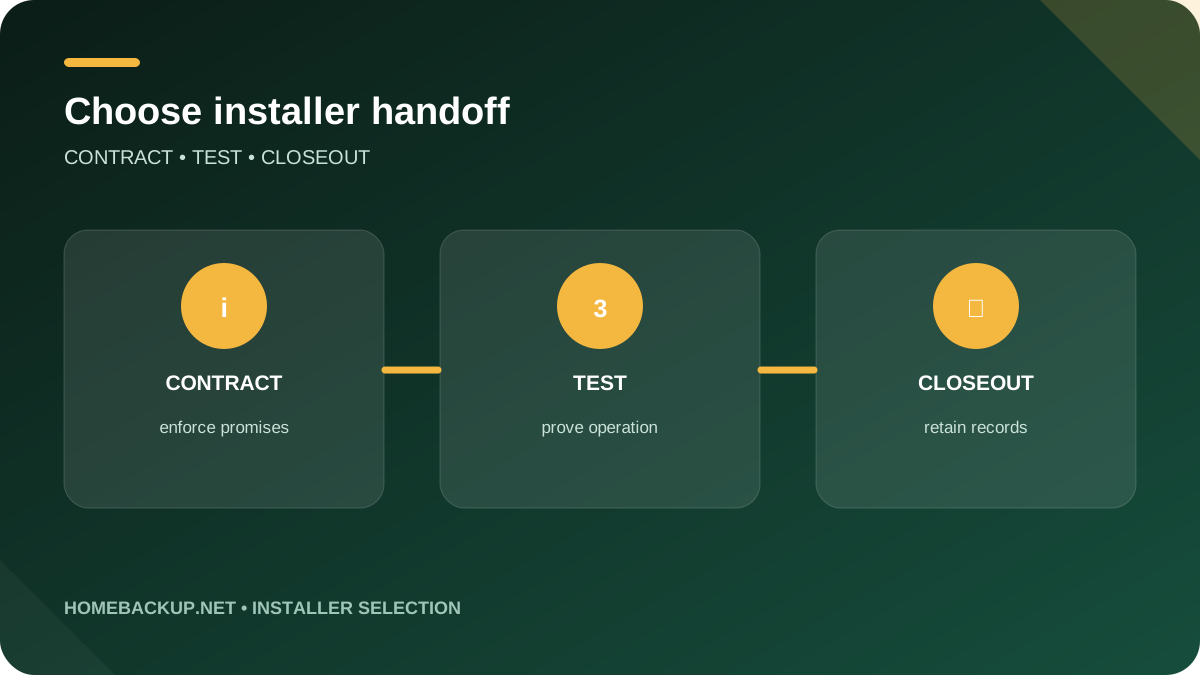
Do not let a sales representative perform hazardous electrical, service, fuel, or battery work unless they hold the qualifications required for that task. Ask who will be on site and who supervises. Stop work if crews depart materially from approved plans or propose bypassing inspection, transfer isolation, listing instructions, or fuel testing.
A contractor should be able to explain generator carbon-monoxide precautions, battery emergency procedures, shutdown, working clearance, fire and flood considerations, and household training without minimizing them. Safety answers should refer to the exact equipment, approved plans, and current authorities.
Portable generators must operate outdoors and away from the home, doors, windows, vents, garages, crawlspaces, and other enclosed or attached areas, following current CPSC guidance and the manufacturer’s instructions. Use working carbon monoxide alarms. A transfer switch or interlock prevents source overlap; it does not make unsafe generator placement safe.
An installer selection workflow
- 1
Prepare one project brief
Use the same loads, site facts, photos, architecture, and desired outcomes for every firm.
- 2
Build a qualified shortlist
Verify business, licenses, insurance, authorizations, experience, and service territory.
- 3
Require site surveys and written designs
Compare loads, one-lines, locations, equipment, permits, and commissioning.
- 4
Normalize written cash proposals
Separate scope, allowances, exclusions, financing, maintenance, and warranty labor.
- 5
Check references and contract terms
Focus on corrections, price changes, service, closeout, and written promises.
- 6
Use evidence-based milestones
Hold final payment through inspection, utility approval, testing, documents, and training.
Related completed guides
Frequently asked questions
How many installer quotes should I get?
At least three qualified site-specific proposals can reveal differences in architecture, scope, assumptions, and price. Use the same project brief and ask each bidder to explain material differences rather than simply choosing the lowest.
Is NABCEP certification required?
Requirements vary. NABCEP credentials can demonstrate advanced renewable-energy or storage knowledge, but they do not replace state or local contractor, electrician, fuel, engineering, or permit requirements. Verify every claimed credential.
Should I choose a manufacturer-authorized installer?
Authorization can provide product training, commissioning access, and warranty channels, but it is not a complete quality guarantee. Verify local trade credentials, design, subcontractors, permit performance, contract, commissioning, and service.
What insurance should an installer have?
Ask for current certificates appropriate to the work, commonly including general liability and workers compensation where required, plus vehicle or professional coverage as applicable. Confirm requirements and certificates with local rules and the issuer.
How much should I pay upfront?
State laws and project models vary. Do not pay the full amount upfront. Use a written payment schedule tied to real milestones and verify local deposit limits, cancellation rights, lien rules, and financing terms.
What is the biggest contract red flag?
A vague scope combined with large early payment. Exact equipment, work, exclusions, permits, schedule, change orders, performance assumptions, commissioning, closeout, and warranties should be written before money changes hands.
Can I use this guide as an electrical design?
No. This guide organizes homeowner decisions and quote questions. It does not select conductors, breakers, overcurrent protection, grounding, bonding, transfer configuration, fire separation, or service equipment for a property. Use the current product instructions and appropriately qualified professionals.
Which code edition applies to installer selection?
The edition adopted by the state or local authority having jurisdiction, including local amendments, applies. The newest published NEC or NFPA standard is not automatically the enforceable edition. Ask the permit office and installer to identify the adopted requirements used for the plans.
How this guide was prepared
HOMEBACKUP.net separates product capability from site approval and installation design. This guide uses current government, standards-organization, testing, credentialing, and manufacturer material where appropriate. It does not reproduce a local code, approve equipment, provide engineering, create a contractor relationship, or replace the current instructions for the exact system.
Requirements change with the locally adopted code edition, amendments, product listing, site conditions, utility rules, and project scope. Treat dates, incentives, fees, and cost bands as items to recheck. Obtain a site-specific design and written quote from appropriately qualified professionals before purchasing installed equipment.
Sources and review basis
Reviewed July 22, 2026. Installation, cost, permitting, code, and incentive information can change and must be verified for the property.
- U.S. Department of Energy: Choosing a Solar Installer
- U.S. Department of Energy: Step-by-Step Guide for Consumers Going Solar
- Federal Trade Commission: How To Avoid a Home Improvement Scam
- NABCEP: Energy Storage Installation Professional Certification
- U.S. Department of Energy: Permitting and Inspection for Rooftop Solar
Product listings, installation instructions, code editions, utility programs, permits, contractor rules, fees, and incentives can change. Use current documents and the authority having jurisdiction for the actual project.
Send a structured installation request
Use the installation quote request form to organize your loads, property, preferred architecture, and schedule before speaking with contractors.