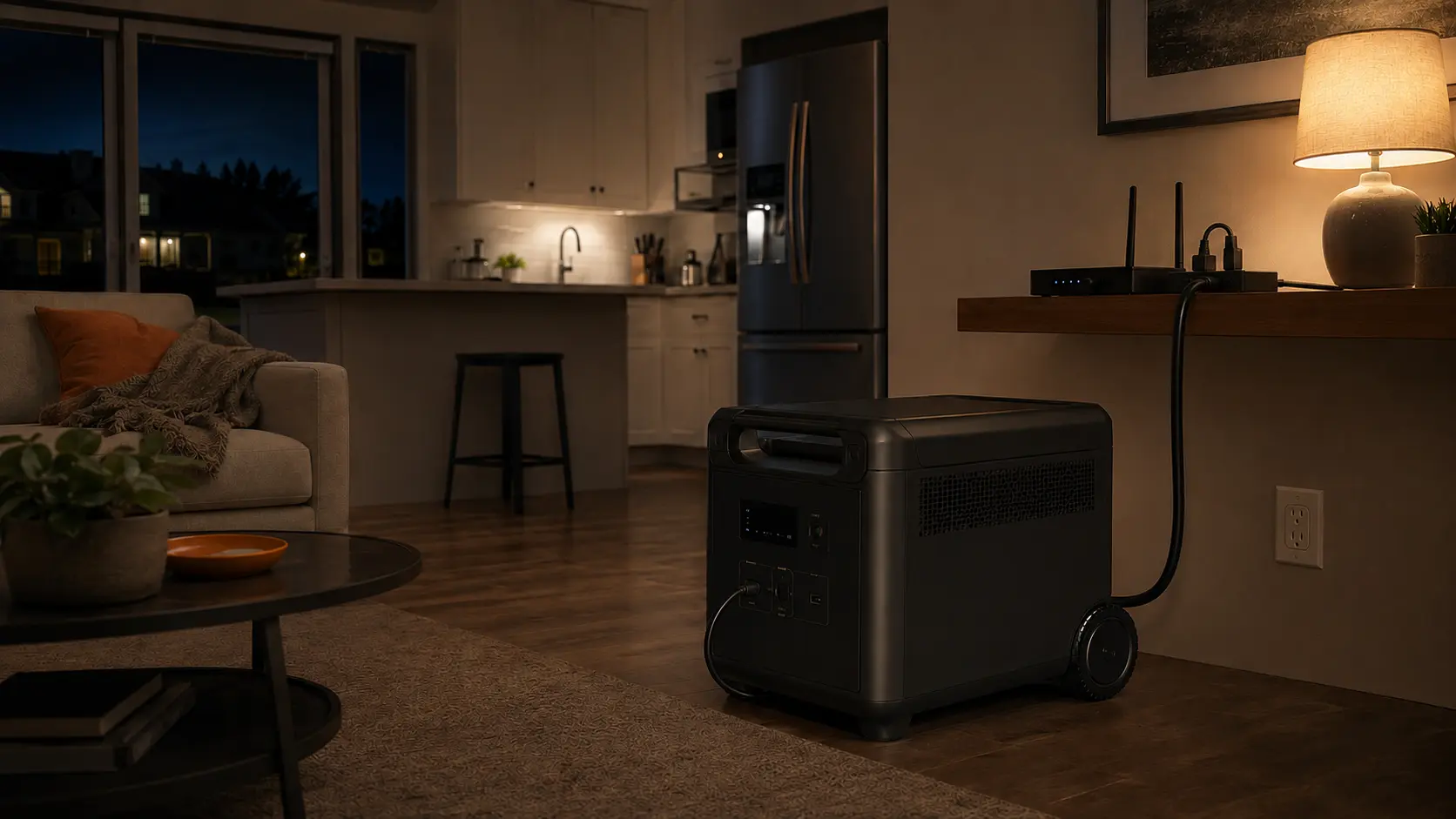
2026 homeowner buying guide
The best portable power station for home backup is the one that can start your actual appliances, store enough energy for your target outage, provide the voltage your loads require, and recharge before its reserve is exhausted. We compared five current systems using their base-unit specifications, supported expansion paths, home-connection options, and practical fit for essential household loads.

Anker SOLIX F3800 Plus is the best all-around starting point, but there is no universal winner
F3800 Plus combines 6,000 W output, a 3.84 kWh base battery, 120/240V support, strong solar input, generator-aware charging options, and a large expansion path. Jackery Explorer 5000 Plus is stronger for demanding loads and a larger base battery. EcoFlow DELTA Pro 3 is the most balanced middle choice. BLUETTI Apex 300 suits modular buyers who expect to expand. Jackery HomePower 3000 is the simpler option for 120V essentials. Choose by use case, not by the largest number in an advertisement.
Best portable power stations for home backup at a glance
These are use-case winners, not five interchangeable products in a simple first-to-fifth ranking. A homeowner backing up a refrigerator, internet equipment, and a few lights has a different requirement from someone who needs a 240V well pump or a central air conditioner. The cards below route you to the closest match before the detailed comparison.
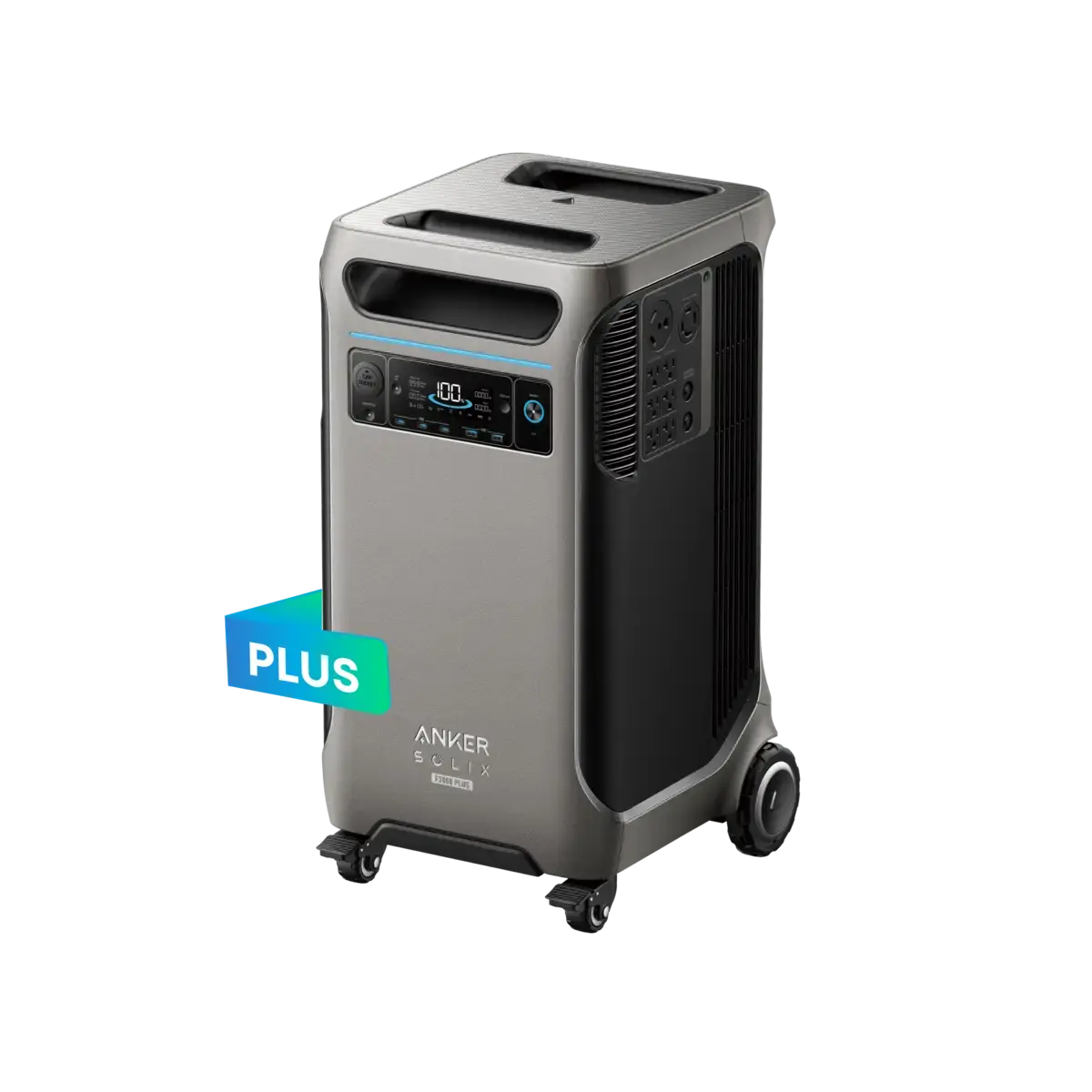
Strong output, 120/240V, useful solar input, and a broad expansion path.
Read full guide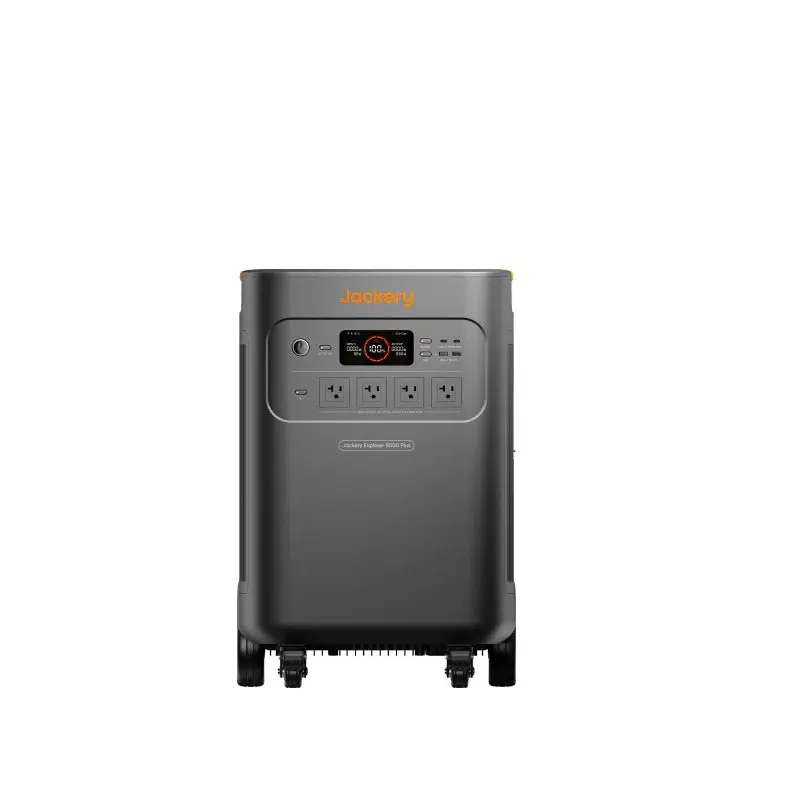
Highest base output and capacity in this portable shortlist.
Explore Jackery home backup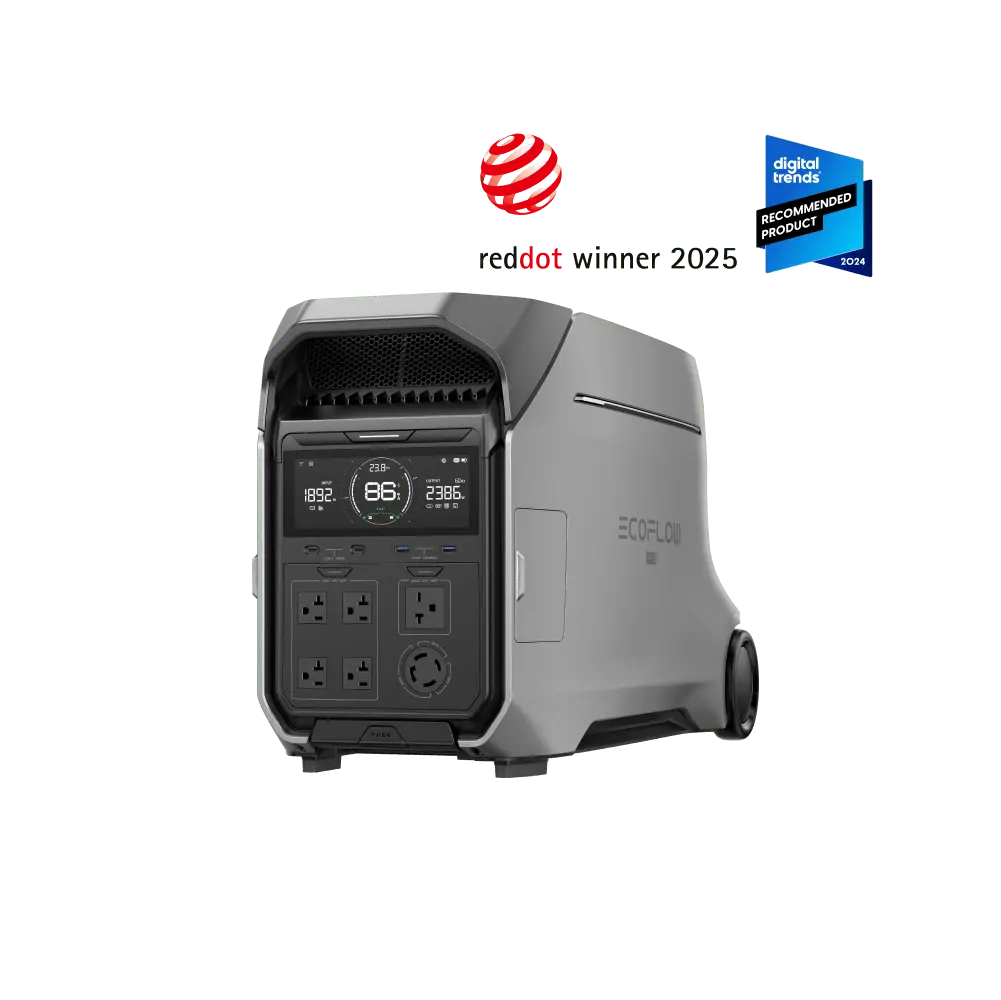
A practical blend of 4.096 kWh, 4,000 W, dual voltage, and mobility.
Read full guide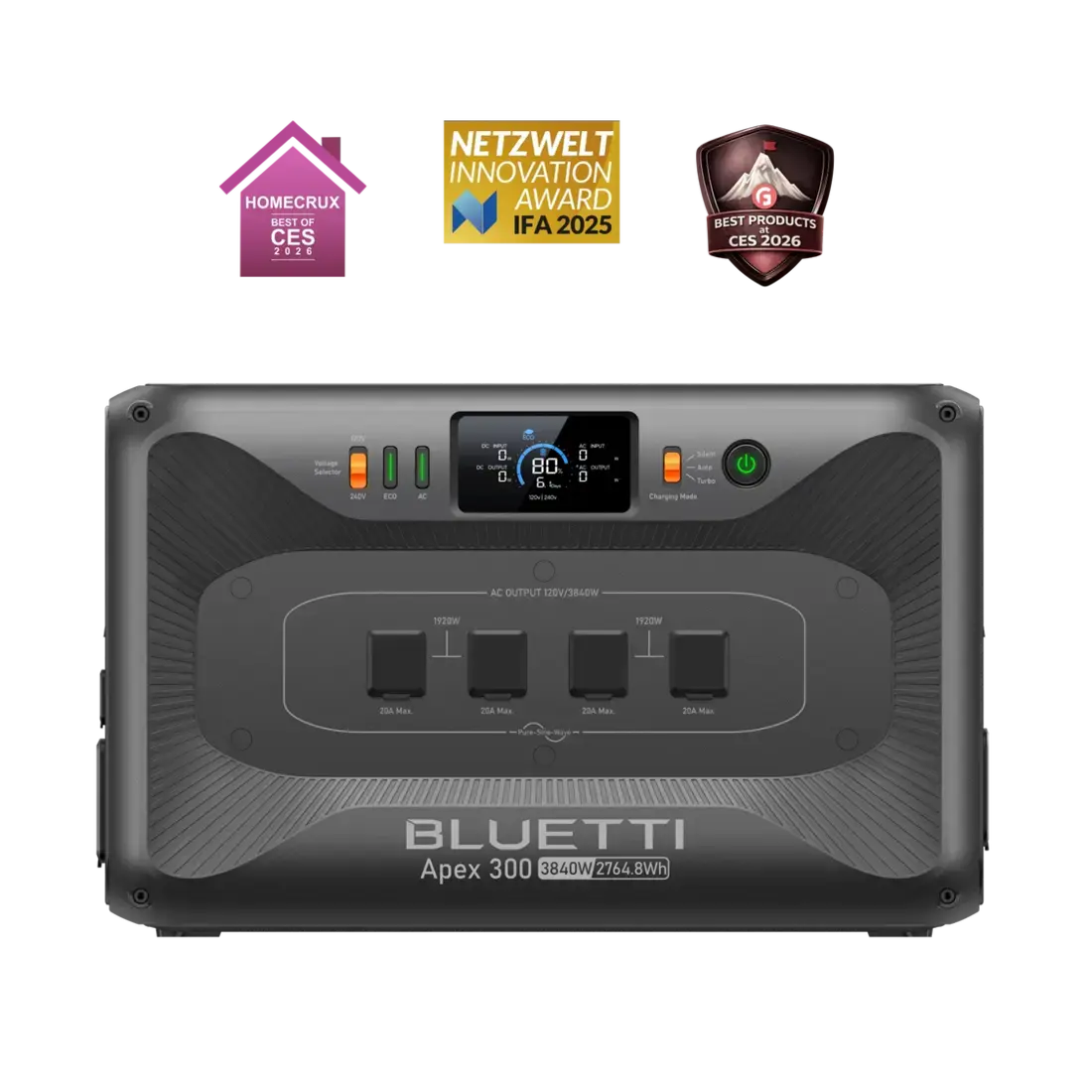
A lower-capacity starting point with extensive battery and system expansion.
Read full guide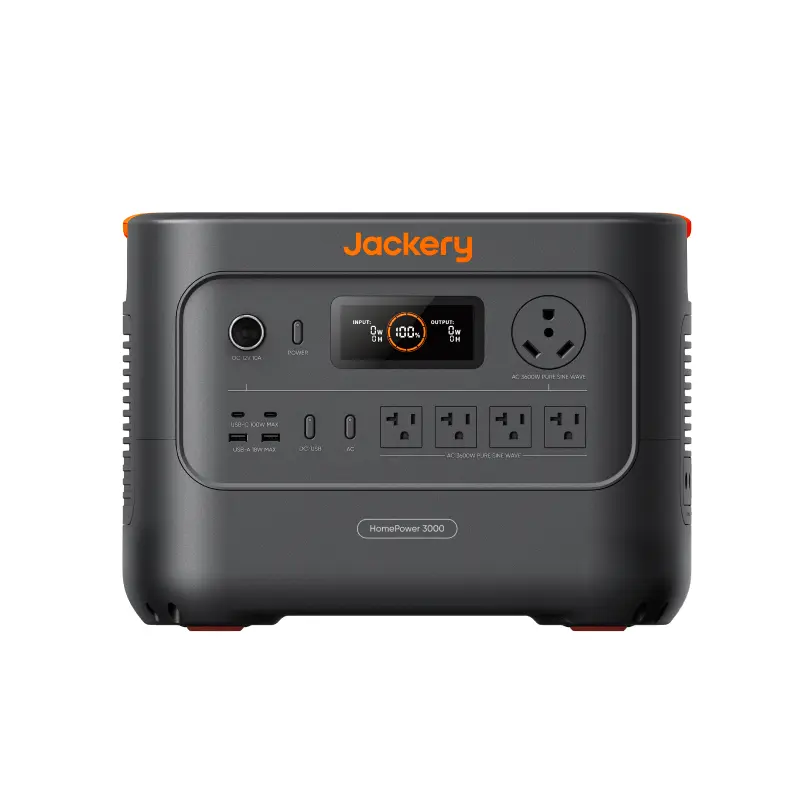
A straightforward 120V-focused station for selected plug-in loads.
Read full guidePortable home-backup power station comparison
The table uses base-unit values wherever possible. Expansion figures are shown separately because they can require multiple batteries, two or three main power stations, proprietary hubs, panels, cables, and professional electrical work. Use normal continuous output for planning, not lifting, boost, or short surge modes.
| Model | Base capacity | Normal AC output | Voltage | Expansion path | Best match |
|---|---|---|---|---|---|
| Anker SOLIX F3800 PlusBest overall | 3,840 Wh | 6,000 W | 120/240V | Up to 26.88 kWh with one main unit, or 53.76 kWh in a supported dual system | Flexible high-output backup with solar and generator-aware options |
| Jackery Explorer 5000 PlusBest for heavy loads | 5,040 Wh | 7,200 W | 120/240V | Up to 30 kWh with one main unit, or 60 kWh with two supported units | Larger motors, broader circuit sets, and buyers who want more base energy |
| EcoFlow DELTA Pro 3Best balanced choice | 4,096 Wh | 4,000 W | 120/240V | Up to 12 kWh around one unit; larger ecosystem configurations require more hardware | Strong essential loads, selected 240V equipment, RV, and mobile use |
| BLUETTI Apex 300Best modular path | 2,764.8 Wh | 3,840 W | 120/240V platform | Up to about 58 kWh and 11.52 kW with a multi-unit, multi-battery system | Buyers starting smaller who expect substantial battery expansion |
| Jackery HomePower 3000Best simple essentials | 3,072 Wh | 3,600 W | 120V-focused | Fixed-capacity product; do not assume a large modular expansion route | Refrigeration, internet, lights, office equipment, and plug-in essentials |
How we chose the best portable stations for home backup
We evaluated current manufacturer documentation against a homeowner-first framework. The list favors products with enough normal continuous output for meaningful household loads, at least roughly 3 kWh of base storage, a clearly documented voltage path, a practical recharge strategy, and a credible way to expand or connect safely. We did not use temporary sale prices because they change frequently and can make a weaker fit appear better for a short period.
Can it run and start the loads?
We compared continuous watts, voltage, receptacle limits, and published surge behavior. Continuous output remains the planning baseline.
Can it run them long enough?
Base capacity matters because a powerful inverter can drain a small battery quickly. Expansion is useful only when the complete path is practical.
Can it serve the home safely?
Direct outlets, transfer inlets, smart panels, and automatic transfer are different architectures with different cost and installation needs.
Can it recharge during an outage?
We reviewed grid, solar, and generator paths while treating maximum input as an equipment ceiling, not guaranteed daily energy.
Can the household live with it?
Weight, floor space, cables, app dependence, warranty, support, and accessory availability affect long-term resilience.
Is the claimed setup clear?
Products scored better when base specifications and system maximums could be separated without guessing.
This is a specification-based editorial selection, not a claim that HOMEBACKUP.net laboratory-tested every product. Current manuals, property-specific load measurements, and a qualified electrical review should control the final decision.
Anker SOLIX F3800 Plus
Anker SOLIX F3800 Plus earns the overall recommendation because it covers more home-backup pathways without forcing the buyer immediately into a fixed whole-home system. One unit combines 6,000 W output with 3.84 kWh of storage and 120/240V receptacles. It can serve direct plug-in appliances, connect through approved transfer equipment, use the optional home-power architecture, and expand with compatible batteries. Anker also documents 240V generator charging and bypass scenarios, which can be valuable when solar alone is unreliable during a long outage.
The main compromise is energy. A 6,000 W inverter attached to a 3.84 kWh base battery can run demanding loads, but it cannot run them for long. At an illustrative 85 percent delivered-energy allowance, the base unit provides about 3.26 kWh for AC loads. That is a useful essentials reserve, not unrestricted whole-home energy. Homeowners attracted by the 6 kW output should budget for battery expansion or disciplined high-load scheduling.
Choose it when
You need native 120/240V, strong single-unit output, a large battery-expansion path, high solar input, and credible generator-supported recovery options.
Plan around
The relatively small base battery, heavy equipment, proprietary accessories, and the extra cost and electrical work required for clean household-circuit integration.
For a refrigerator, freezer, internet, lights, a home office, and intermittent pump use, the base capacity can be productive when the household manages overlap. For central HVAC, electric water heating, cooking, or longer outages, the practical system is no longer the base station alone. It becomes a package of expansion batteries, transfer hardware, a charging source, and a written load-shedding plan.
Jackery Explorer 5000 Plus
Explorer 5000 Plus has the strongest base-unit numbers in this shortlist: 5.04 kWh of LFP storage, 7,200 W rated output, a published 14,400 W surge, and 120/240V operation. This gives it a meaningful advantage for homeowners whose essential list includes pumps, larger tools, cooking appliances, or broader selected-circuit coverage. Jackery also publishes an expansion route to 30 kWh around one main unit and up to 60 kWh with two supported units and additional battery packs.
The extra output should still be treated carefully. At 7.2 kW, the base battery’s illustrative 4.28 kWh of delivered AC energy could be consumed in well under an hour. The system is strongest when high-power loads operate briefly while lower, steady loads dominate daily energy. A water heater or central air conditioner can be technically startable yet still impractical to run for many hours from the base battery.
Choose it when
You want the largest base battery and highest normal output in this group, native split-phase power, and a clear route from direct outlets to selected home circuits.
Plan around
A roughly 134.5 lb main unit, substantial floor space as batteries are added, and configuration-specific rules for transfer, solar, and generator charging.
Jackery’s supported smart transfer equipment can create a much cleaner home-backup experience than running extension cords. That upgrade changes the project from portable appliance power to installed electrical work. The quote should name every protected circuit, the transfer boundary, permitted maximum current, solar behavior during an outage, and whether generator charging remains available in the chosen operating mode.
EcoFlow DELTA Pro 3
EcoFlow DELTA Pro 3 is the most balanced option for buyers who want substantial home-backup capability without jumping to the largest and most complex systems. Its 4.096 kWh battery and 4,000 W continuous inverter are well matched for refrigeration, communications, lights, office equipment, a furnace blower, and selected pump or 240V loads after startup verification. EcoFlow publishes 8,000 W surge, LFP chemistry, a 10 ms UPS specification for the relevant standalone mode, and compatible battery expansion around the base unit.
Its lower output than F3800 Plus or Explorer 5000 Plus can be an advantage if it encourages realistic load management. Four kilowatts is enough for a strong essential-load set, but it discourages the assumption that every large household appliance can run together. The 4.096 kWh base also provides slightly more stored energy than F3800 Plus, producing about 3.48 kWh in an illustrative 85 percent delivered-energy model.
Choose it when
You want a mature portable ecosystem, native 120/240V output, strong solar input relative to battery size, and a sensible middle point between outlet backup and home integration.
Plan around
The 4 kW simultaneous-load ceiling, a main-unit weight of about 113.5 lb, and EcoFlow accessory compatibility that can vary by product generation.
DELTA Pro 3 is especially attractive for a household that wants one unit to serve both emergency backup and RV or mobile use. If it is permanently connected to home circuits and surrounded by expansion batteries, compare the complete project with a fixed home battery. Mobility has value only when the household will genuinely use it.
BLUETTI Apex 300
BLUETTI Apex 300 is the most configuration-sensitive recommendation on this page. One unit starts at 2.7648 kWh and 3,840 W output, which is a strong inverter attached to the smallest base battery in the group. Compatible B300K batteries add energy, while multi-unit configurations can raise both output and capacity. BLUETTI publishes a system maximum of up to 11.52 kW and about 58 kWh using two or three main units and as many as 18 batteries.
That broad range is the reason to shortlist Apex 300 and the reason to compare it carefully. The base product and the maximum system are not remotely the same purchase. A practical buyer should price three explicit configurations: the base unit, a one-unit system with enough battery for one outage day, and the smallest supported 120/240V home setup that meets the load sheet. Include hubs, solar accessories, transfer equipment, cables, freight, and installation.
Choose it when
You value a smaller starting battery, strong output for the base size, BLUETTI’s off-grid orientation, and the option to build a much larger modular system later.
Plan around
Configuration complexity, a short base runtime under heavy loads, additional hardware for larger split-phase systems, and significant floor space at high capacity.
BLUETTI advertises rapid UPS behavior, large solar potential, and generator charging options. Confirm which value applies to the exact ports and accessories in your package. A zero-millisecond UPS claim for a defined output should not be treated as proof that every household circuit transfers without interruption.
Jackery HomePower 3000
Jackery HomePower 3000 is the simpler recommendation for households that do not need a native 240V platform or a massive expansion architecture. Its 3.072 kWh battery and 3,600 W output can support a useful set of plug-in essentials, including refrigeration, internet equipment, lights, device charging, a home office, and brief use of selected cooking or comfort appliances. Jackery publishes UPS switching within 20 ms for the supported mode and notes that this is not a zero-millisecond online UPS.
The fixed-capacity approach makes the buying decision easier but limits long-outage growth. With an illustrative 85 percent delivered-energy allowance, the station offers about 2.61 kWh for AC loads. That can cover a disciplined overnight plan or many hours of modest essentials, but a space heater, portable air conditioner, or frequent cooking can consume it quickly.
Choose it when
Your plan centers on 120V plug-in essentials, you prefer a simpler package, and you do not expect to build a large multi-battery household system later.
Plan around
No large modular expansion route, less suitability for 240V loads, and limited runtime if resistive heating, cooling, or cooking dominates the energy budget.
This model is often a better fit than a larger system for apartments, rentals, and households that want to avoid permanent electrical work. Plug appliances directly into the station using approved cords within receptacle ratings. Do not improvise a connection to household wiring.
How long will these portable power stations run home essentials?
Runtime depends on energy, not only watts. The simple planning formula is usable watt-hours divided by average load watts. The examples below allow 15 percent for reserve, conversion loss, standby consumption, and other uncertainty. They are illustrations, not measured promises. Temperature, battery age, firmware, inverter efficiency, startup events, and appliance duty cycle can change the result.
| Base unit | Planning energy at 85% | 150 W average | 300 W average | 1,000 W average |
|---|---|---|---|---|
| Anker SOLIX F3800 Plus | 3.26 kWh | About 21.8 hours | About 10.9 hours | About 3.3 hours |
| Jackery Explorer 5000 Plus | 4.28 kWh | About 28.6 hours | About 14.3 hours | About 4.3 hours |
| EcoFlow DELTA Pro 3 | 3.48 kWh | About 23.2 hours | About 11.6 hours | About 3.5 hours |
| BLUETTI Apex 300 | 2.35 kWh | About 15.7 hours | About 7.8 hours | About 2.4 hours |
| Jackery HomePower 3000 | 2.61 kWh | About 17.4 hours | About 8.7 hours | About 2.6 hours |
A 150 W average might represent internet equipment, efficient lighting, device charging, and a modest refrigerator averaged over its duty cycle. A 300 W average could include additional freezer, office, or furnace-blower energy. A continuous 1,000 W load demonstrates why heating, cooling, cooking, and hot water quickly dominate a battery plan.
For a cycling refrigerator, freezer, sump pump, or furnace, measure daily energy rather than multiplying the running wattage by 24 hours. A plug-in meter can help with compatible 120V appliances. Hardwired and 240V loads need qualified measurements or equipment data. Use the Battery Runtime Calculator to test your own load and reserve assumptions.
Direct outlets, transfer switches, and automatic home backup
A portable station can serve a home in several fundamentally different ways. The simplest is direct appliance connection. Plug the refrigerator, internet equipment, lamps, or other selected devices into the station using appropriately rated cords. This avoids energizing household wiring and can work well in apartments, rentals, and short outages.
A manual transfer switch or approved inlet can route the station to selected home circuits. This is cleaner than extension cords and can serve hardwired loads, but it requires compatible voltage, listed equipment, correct neutral and grounding decisions, overcurrent protection, permits where required, and qualified electrical work. The homeowner still may need to start the station, connect it, transfer circuits, and shed large loads.
A manufacturer’s smart panel or automatic transfer product can detect a grid outage and move protected circuits to battery power. It also adds cost, installation, software, communications, and configuration dependencies. Confirm which circuits transfer, maximum current, switch time, solar behavior, generator compatibility, reserve logic, and what happens when the internet or a proprietary controller is unavailable.
Direct appliance connection
No household backfeed and usually no permanent electrical work. Best for a short, explicit list of 120V plug-in essentials.
Manual transfer equipment
Selected household circuits can be backed up safely, but the system needs compatible output and qualified installation.
Smart or automatic panel
Potentially faster and easier during an outage, with more hardware, commissioning, cost, and proprietary dependencies.
Solar charging, generators, and multi-day outages
Every portable battery has a finite runtime without recovery. For a multi-day outage, compare daily load energy with realistic daily charging energy. A 3,200 W solar-input rating does not mean the system receives 3.2 kW all day. Weather, season, shade, panel temperature, cable losses, voltage limits, controller clipping, and the hours when panels receive useful sun all matter.
A practical solar estimate begins with array watts multiplied by realistic peak-sun hours, then reduced for system loss. A 2,000 W array with four useful peak-sun hours and an 80 percent overall yield might add about 6.4 kWh in a favorable day. A cloudy winter day could deliver far less. Portable panels also need safe outdoor space, theft protection, wind management, dry connectors, and frequent repositioning.
Generator charging can make a battery system more resilient by letting the generator run outdoors for shorter, efficient charging windows while the battery serves loads quietly indoors. Compatibility is not automatic. Confirm generator voltage, frequency stability, neutral and bonding instructions, continuous output, charging demand, connector, and whether charging can occur while protected loads remain powered.
How to choose the right portable power station
-
1
List only the loads that matter during an outage
Include appliance, voltage, running watts, starting demand, daily hours, and whether it can be turned off when another large load starts.
-
2
Find the highest simultaneous demand
Add loads that may overlap, then check the hardest motor start. Use normal continuous output as the baseline and preserve headroom.
-
3
Calculate daily energy
Convert use into watt-hours or kilowatt-hours per day. Include conversion loss, standby use, reserve, difficult weather, and battery aging.
-
4
Confirm 120V or 240V
Well pumps, central HVAC, dryers, ranges, water heaters, and EV charging often require 240V. Voltage alone does not guarantee enough current or startup power.
-
5
Choose the connection architecture
Decide between direct appliance outlets, manual transfer equipment, or supported automatic home integration before buying accessories.
-
6
Plan recovery for the target outage
Model grid, solar, and generator charging using sources that will actually be available. Compare energy added per day with energy consumed per day.
-
7
Price the complete configuration
Include batteries, hubs, panels, transfer equipment, solar, generator cables, permits, installation, freight, and future expansion.
-
8
Run a real outage exercise
Test transfer, motor starting, load overlap, low-battery behavior, charging, alarms, and return to grid power before severe weather arrives.
When a portable station is the wrong architecture
Choose an installed home battery when automatic transfer, daily solar use, clean wall-mounted equipment, broad circuit coverage, and long-term integrated operation matter more than mobility. Consider a standby generator when repeated multi-day outages, cold-weather heating, or very high daily energy demand makes stored battery capacity impractical and a reliable fuel source is available. A hybrid battery-generator design can combine quiet overnight operation with longer duration.
Frequently asked questions
What size portable power station is best for home backup?
A useful essential-load starting point is often 2 to 5 kWh of storage with 2,000 to 4,000 W of continuous output, but actual needs vary. Add the running watts of loads that may overlap, verify the hardest motor startup, then calculate daily kilowatt-hours and outage duration. Homes with 240V pumps, central HVAC, or electric heat may need a larger split-phase system.
Can a portable power station run a refrigerator during an outage?
Usually, if its inverter can start the compressor and its battery has enough daily energy. Refrigerator consumption varies with size, age, room temperature, door openings, thermostat setting, and duty cycle. Measure the appliance when possible and preserve reserve for startup and other essential loads.
Can one of these power an entire house?
A large portable platform can energize many selected circuits, but circuit coverage is not the same as unlimited simultaneous operation. Whole-home claims may require added batteries, multiple inverter units, a smart panel or gateway, professional installation, load management, and solar or generator recovery. Electric HVAC, water heating, cooking, drying, and EV charging can consume energy quickly.
Do I need 240V output?
Not for ordinary plug-in essentials such as refrigerators, internet equipment, lamps, televisions, and device charging. You may need 240V for a well pump, central air conditioner, heat pump, electric water heater, range, dryer, or EV charging. Check the actual equipment label and panel before deciding.
Can I connect a portable power station to my electrical panel?
Yes, when the product supports the intended connection and the home uses listed transfer equipment that prevents backfeeding the utility. Permanent or circuit-level work should be designed and installed or approved by a qualified electrician under local permit and inspection requirements. Never energize home wiring through a wall receptacle.
Is a portable power station safe to use indoors?
A battery power station has no combustion exhaust at the point of use and can often operate indoors when the manufacturer permits it. Keep it dry, within its temperature limits, clear of exits, protected from impact, and adequately ventilated according to the manual. Any combustion generator used for charging must remain outdoors.
How much battery capacity do I need for one day?
Add the watt-hours used by all essential loads in 24 hours, then include reserve and loss. If essential loads consume 4 kWh per day, a 4 kWh nameplate battery is usually too small because not all stored energy reaches the outlets and a reserve is prudent. The Battery Runtime Calculator can help model your own allowance.
Does adding an expansion battery increase output?
Usually it adds energy and runtime, but it does not always increase inverter watts. Some systems raise output only when another main inverter or power station is added. Check the exact configuration because more kilowatt-hours and more kilowatts are separate upgrades.
Can solar panels keep a portable station charged indefinitely?
Only when daily solar energy consistently exceeds daily load energy after weather, seasonal, shading, controller, and conversion losses. Solar can extend runtime dramatically, but several cloudy days can create an energy deficit. Preserve reserve and keep a second safe charging plan for critical loads.
Is UPS mode enough for computers or medical equipment?
Not automatically. A published transfer time applies to a particular mode or output and does not guarantee that every device will ride through. Sensitive computers may need a dedicated UPS. Consumer power stations should not be treated as guaranteed medical-grade backup. Follow the device manufacturer and care team’s instructions and maintain an independent contingency plan.
Size the loads before choosing the brand
Start with running watts, motor startup, daily energy, voltage, outage duration, reserve, and recharge. Then compare that requirement with the base configuration of each system, not its maximum ecosystem headline.
Sources and specification notes
Specifications and product imagery were reviewed against current U.S. manufacturer pages on July 24, 2026. Regional models, firmware, accessories, warranties, and compatible configurations can change. Confirm the current product page, manual, and itemized bill of materials before purchase. Product images are supplied by their respective manufacturers and are shown for identification.
- Anker SOLIX F3800 Plus product information
- Jackery Explorer 5000 Plus product information
- EcoFlow DELTA Pro 3 product information
- BLUETTI Apex 300 product information
- Jackery HomePower 3000 product information
Page specification and image review: July 24, 2026. Runtime figures are editorial planning illustrations, not measured product-test results or guarantees.